Professor AbuBakr Bahaj, Head of the Energy and Climate Change Division at the University of Southampton, joined industry and academic leaders for an “Inspire Change” panel dialogue at the British Science Festival, held in the Centenary Building on 17 September. The event, Making the Circular Economy Real: From Everyday Choices to Systemic Change, explored how individuals, organisations and industries can reduce waste and make better use of resources through reuse, repair, repurposing and recycling.
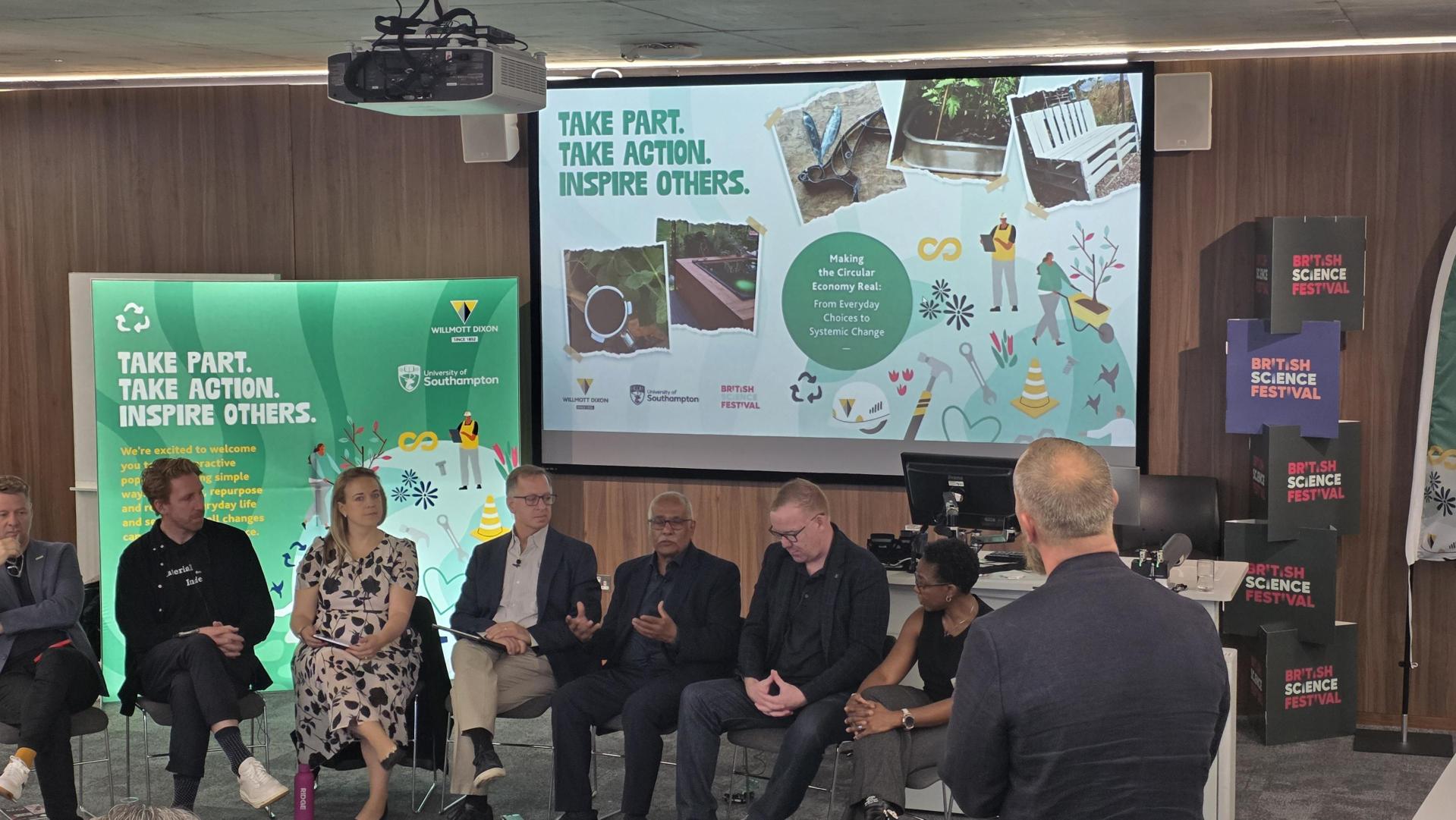
Representing the University of Southampton, Professor Bahaj highlighted the challenge of reconciling circular economy principles with traditional economic models that rely on continual growth and consumption. Drawing on examples from the construction sector, he discussed the need to move away from the assumption that new materials are always preferable and instead consider how existing resources can be repaired, reused and given a second life.
The discussion also examined the barriers to greater circularity in the built environment. Professor Bahaj pointed to the importance of client leadership, clear sustainability strategies and industry-wide collaboration to overcome concerns around risk, specification standards and the use of reused materials. While emphasising that circularity should not come at any cost, he noted the need to balance environmental ambitions with considerations such as safety, contamination and insurability.
Reflecting on the role of universities, Professor Bahaj stressed the importance of educating future engineers and consultants to think differently about the lifecycle of buildings and materials. He also encouraged participants to share examples and stories of successful circular economy initiatives, helping to build wider understanding of the value embedded in materials and resources.
The panel formed part of the British Science Festival’s programme of events showcasing how practical action, collaboration and innovation can contribute to a more sustainable future.